The History of the Corpse Flower
The corpse flower (Amorphophallus titanum) is one of the most dramatic and fascinating plants in the world. Here’s a brief history:
Origins & Discovery
Italian botanist Odoardo Beccari first documented the plant in 1878 in the rainforests of Sumatra, Indonesia — its only native habitat. He sent seeds to the Royal Botanic Gardens at Kew in London, where the first bloom outside its native range occurred in 1889. His brave action caused sensation that time.
Name & Biology
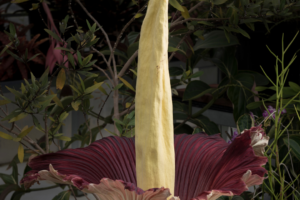
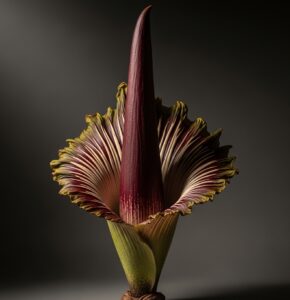
The “corpse flower” nickname comes from the powerful stench of rotting flesh. It emits during its rare bloom. This is a strategy to attract carrion beetles and flies for pollination. The bloom itself is not a single flower but a structure called a spathe and spadix, and it generates heat to help spread the odor.
Rarity & Blooming
Part of its fame is how infrequently it blooms — typically once every 7–10 years for a given plant, and the bloom lasts only 24–48 hours. This makes each flowering event a major public spectacle. Botanical gardens around the world often draw thousands of visitors when one is about to bloom.
Conservation
The species is classified as Endangered on the IUCN Red List, threatened by deforestation and habitat loss in Sumatra. Botanical gardens play an important role in conservation efforts, maintaining living specimens and seed banks.
Cultural Impact
Since the Kew blooming in 1889, corpse flower bloomings have become media events. Notable blooms at institutions like the Chicago Botanic Garden, the US Botanic Garden in Washington D.C., and the Huntington Library have attracted massive crowds and live-stream audiences in the millions.
It remains a symbol of nature’s extremes — extraordinarily rare, pungently theatrical, and breathtakingly unusual.